
TripleTen 2025-2026
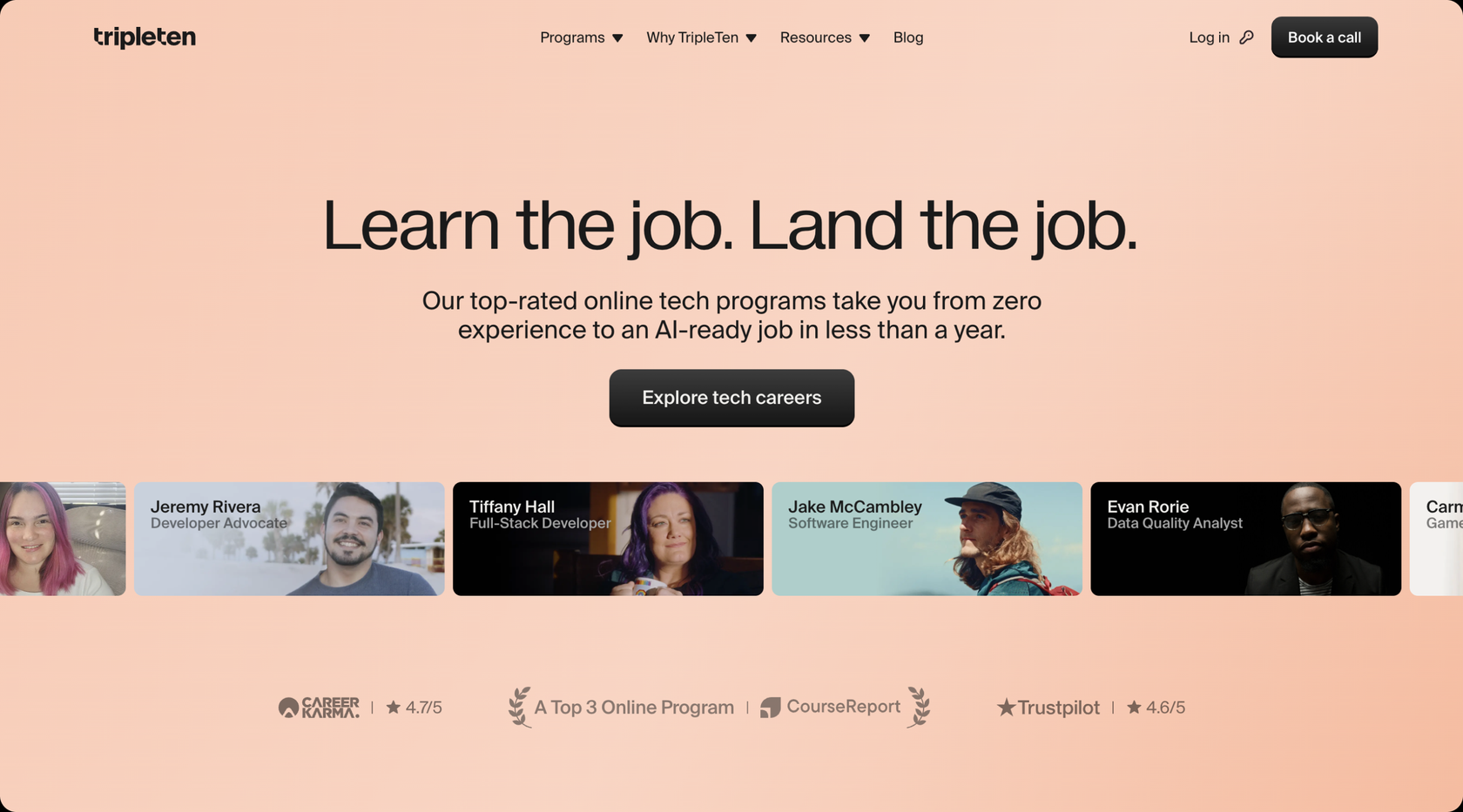
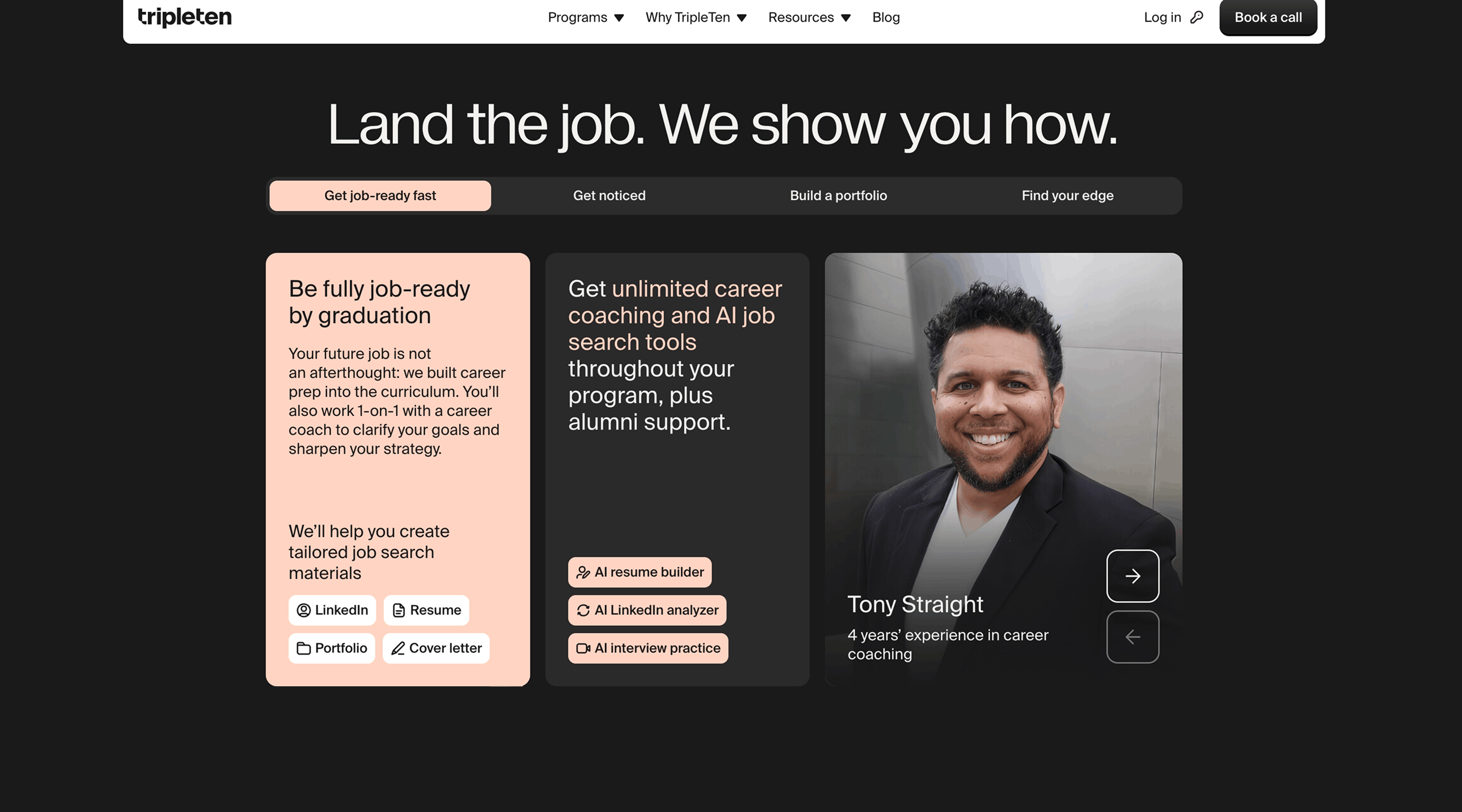
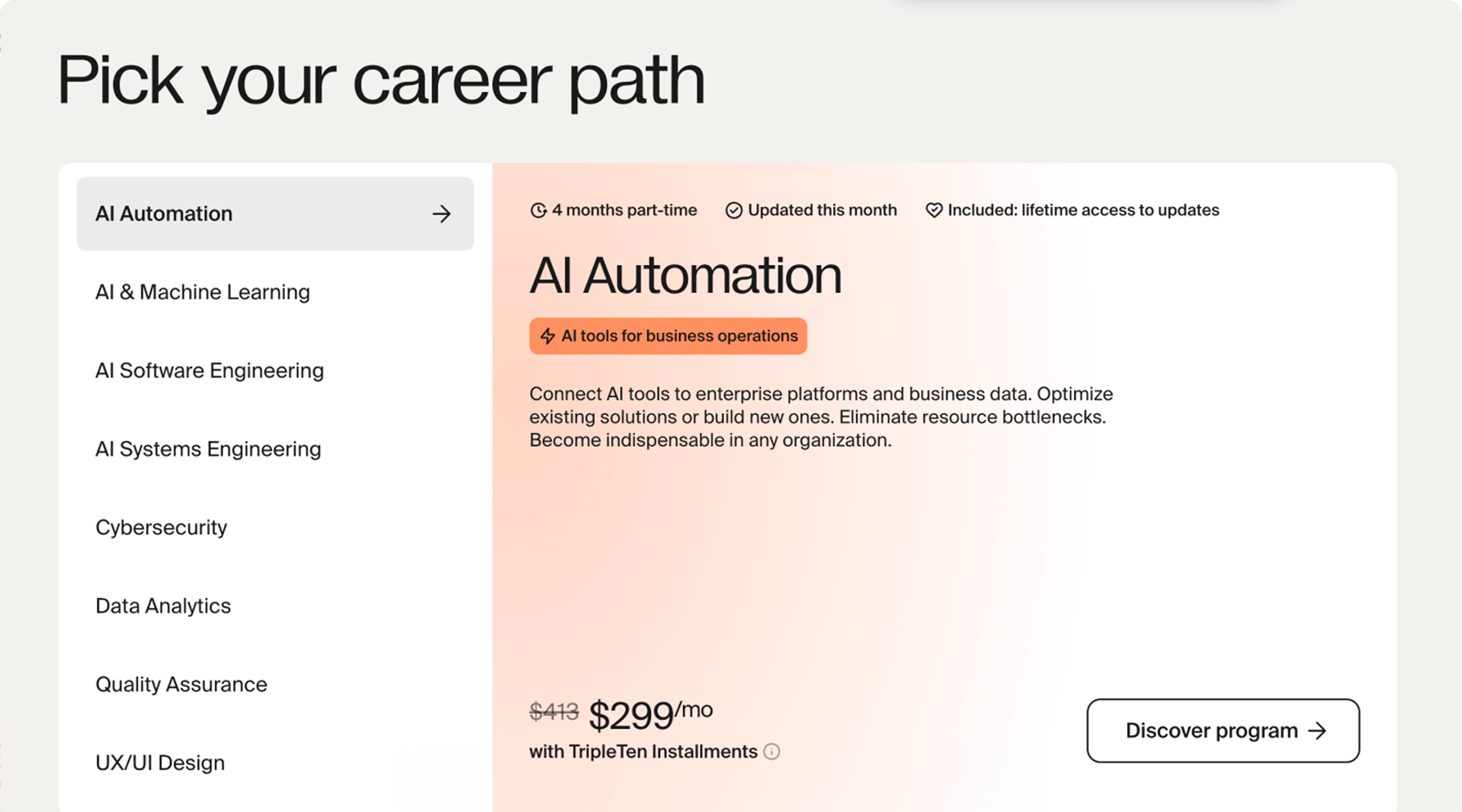
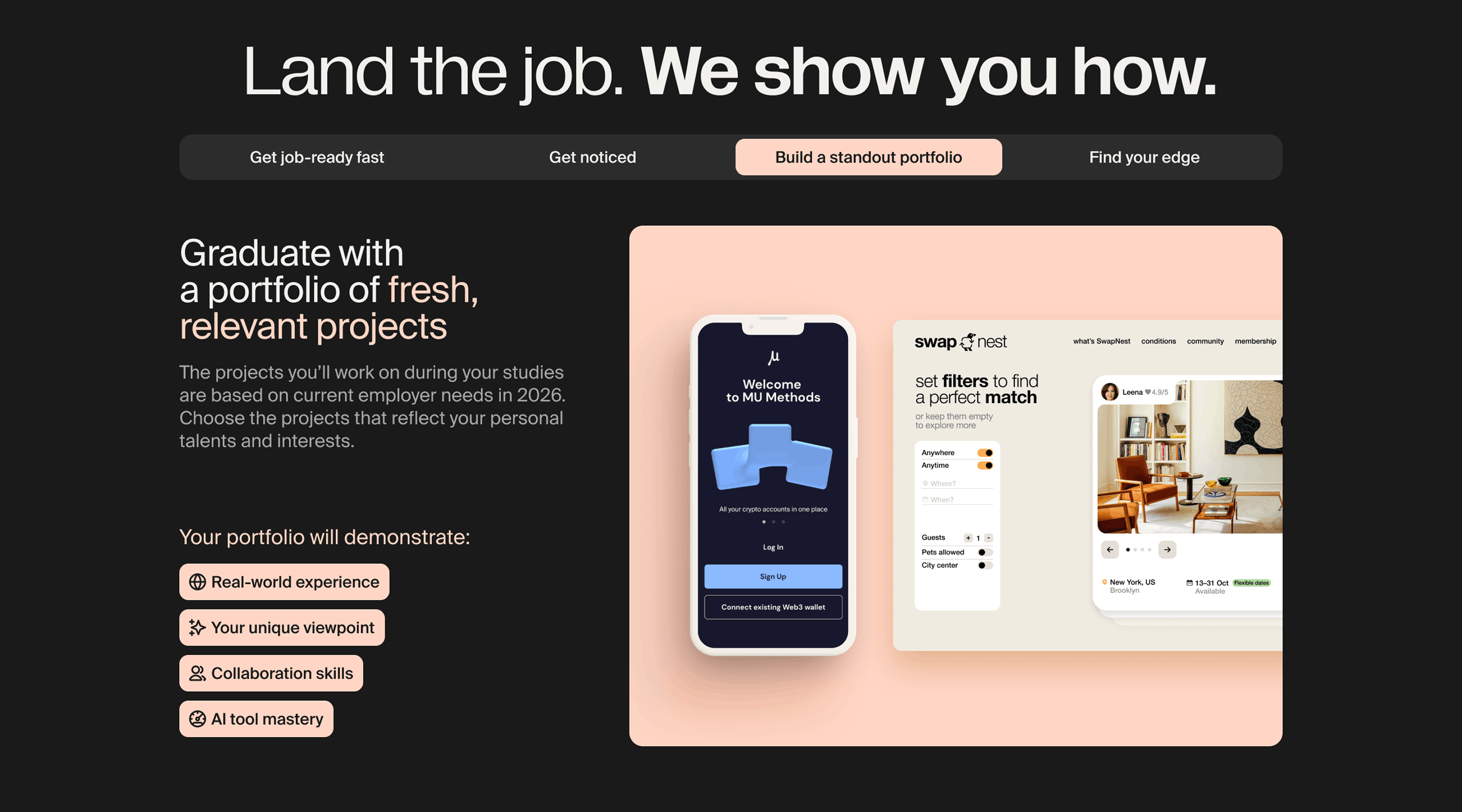
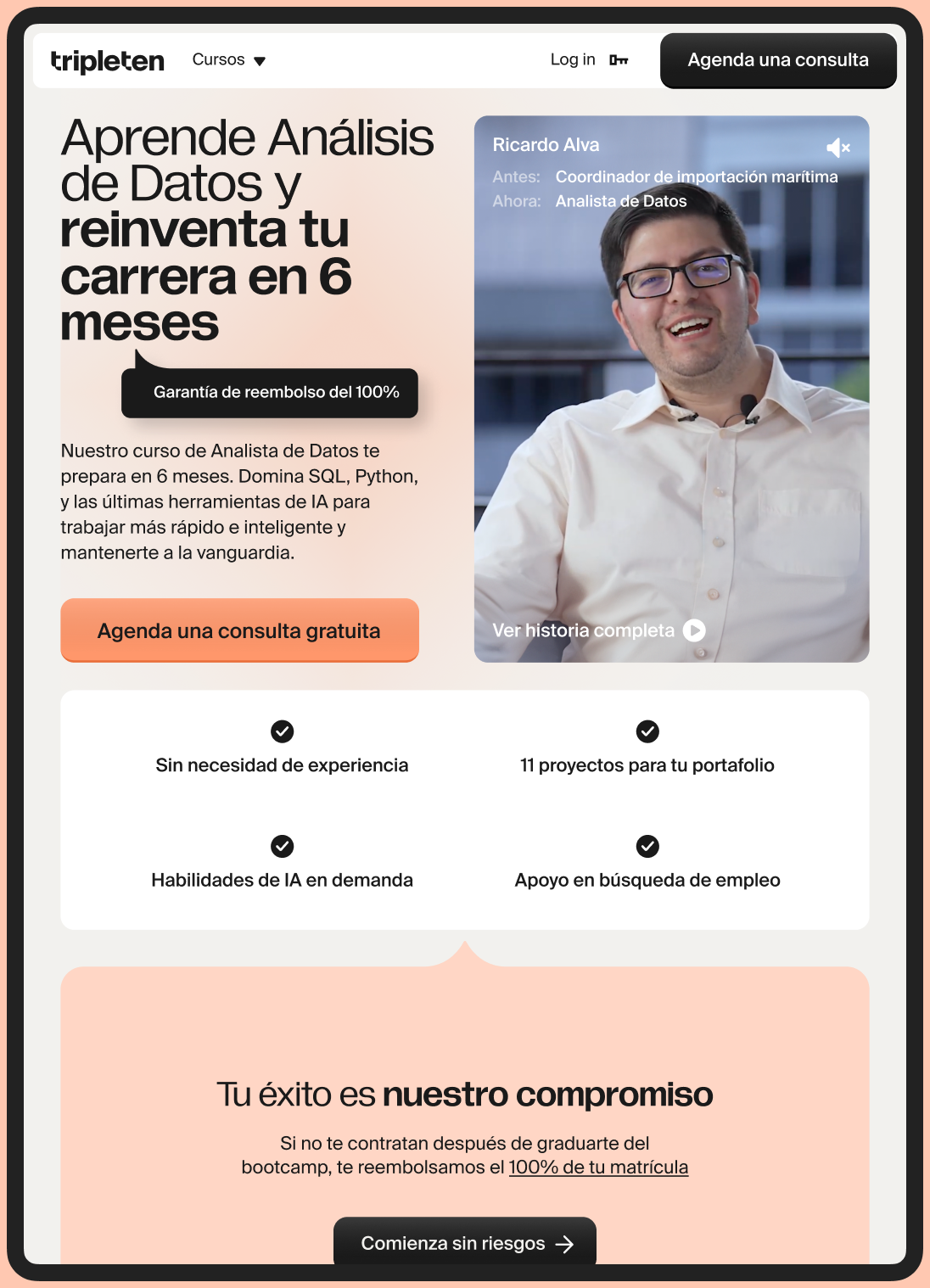
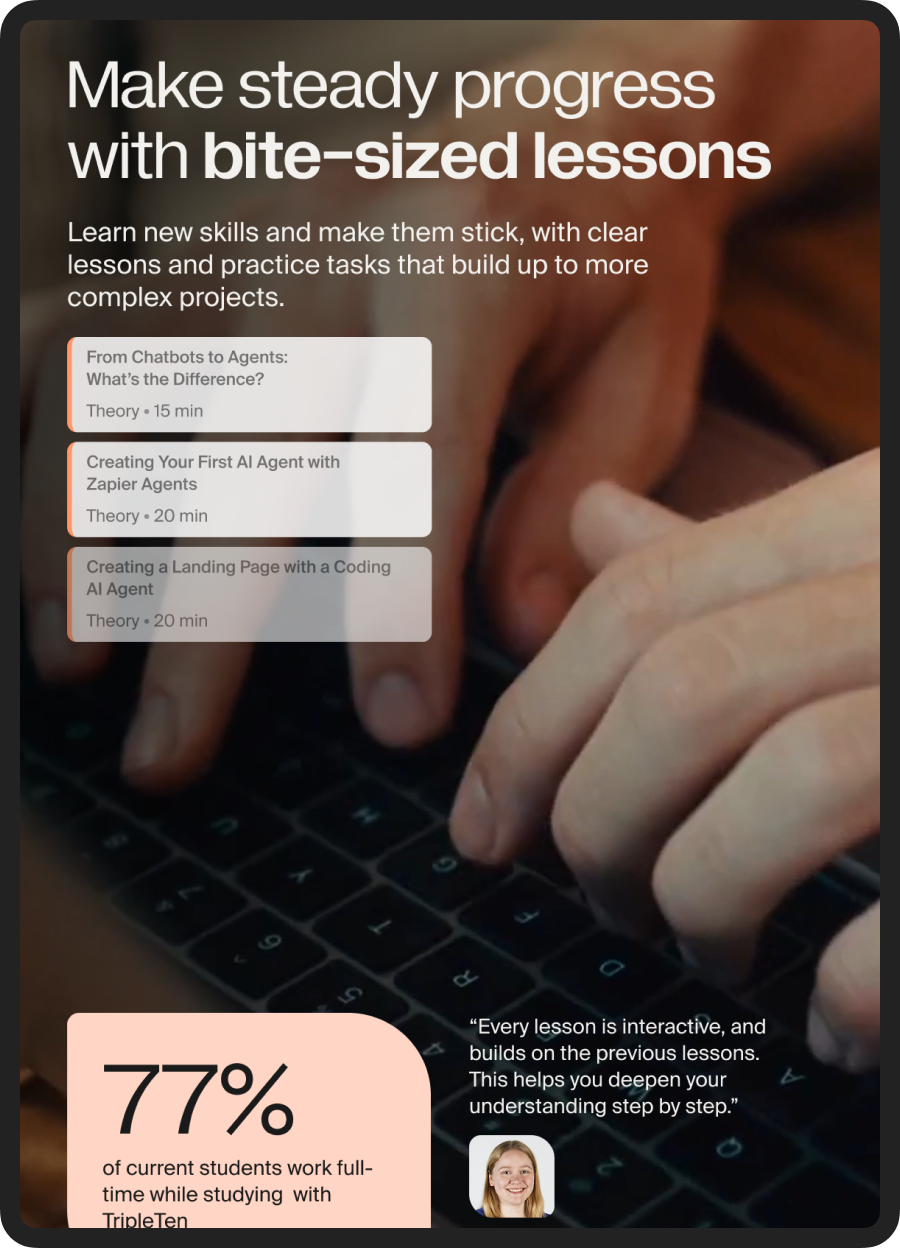
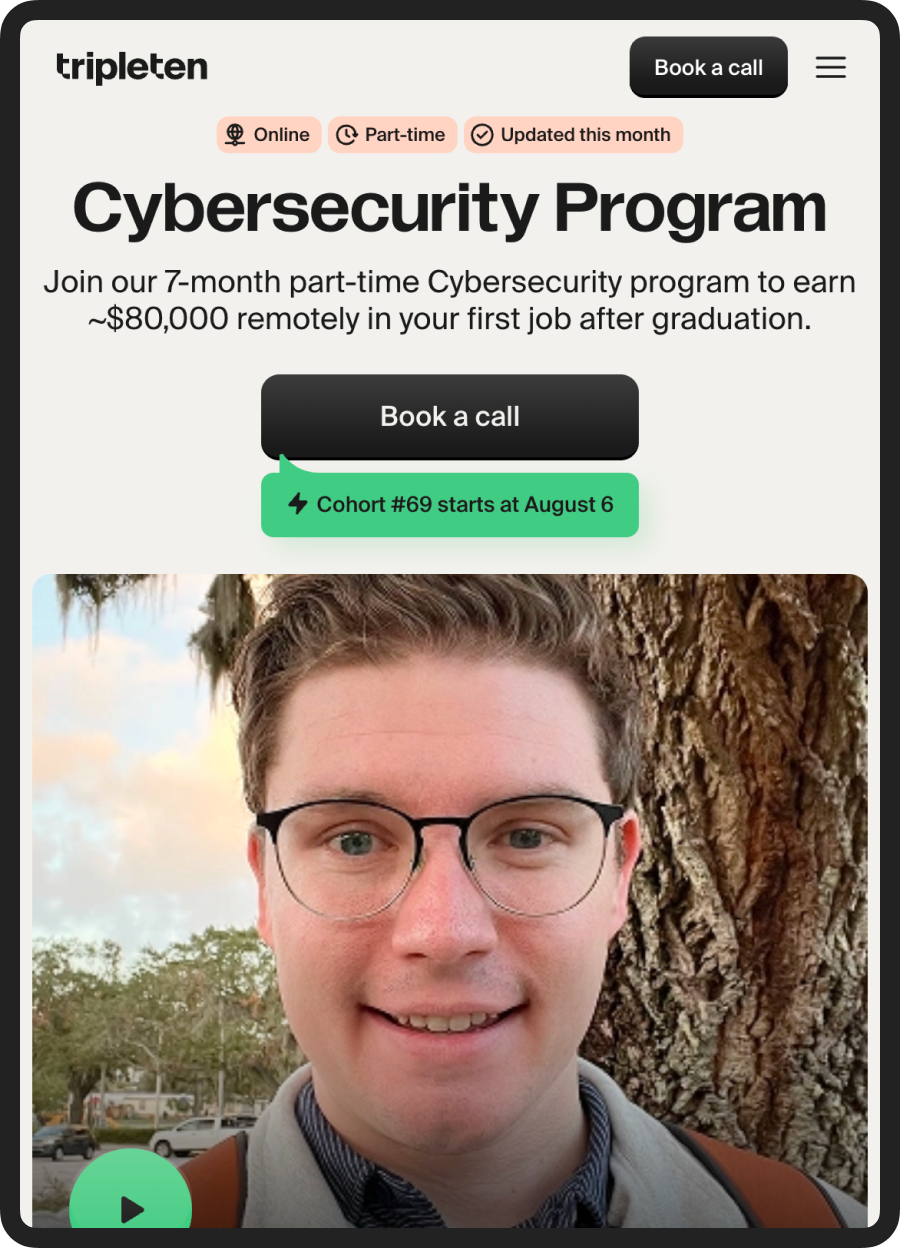
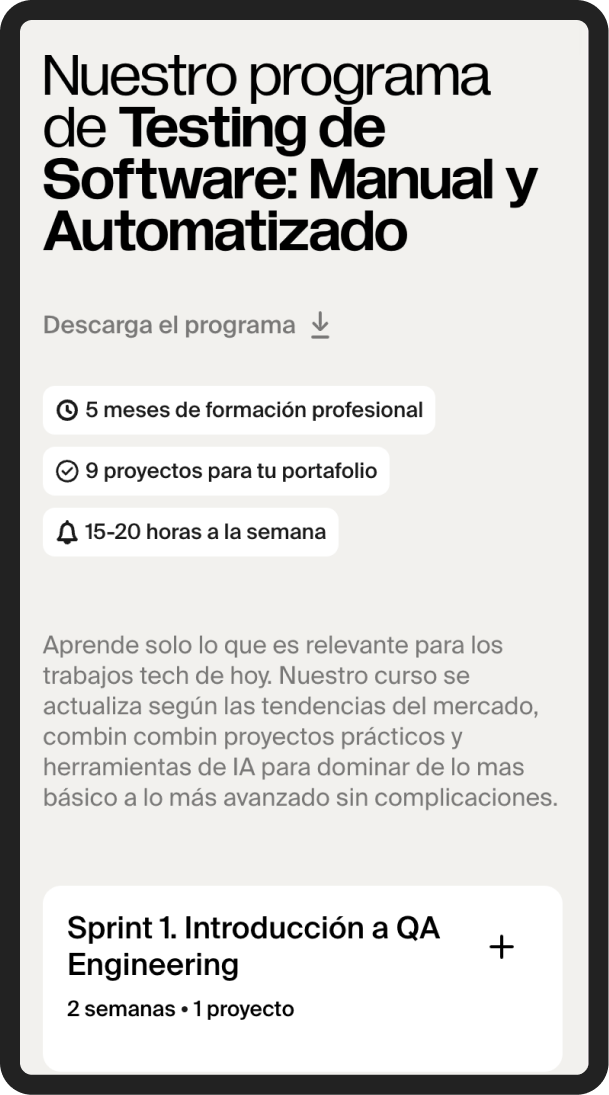
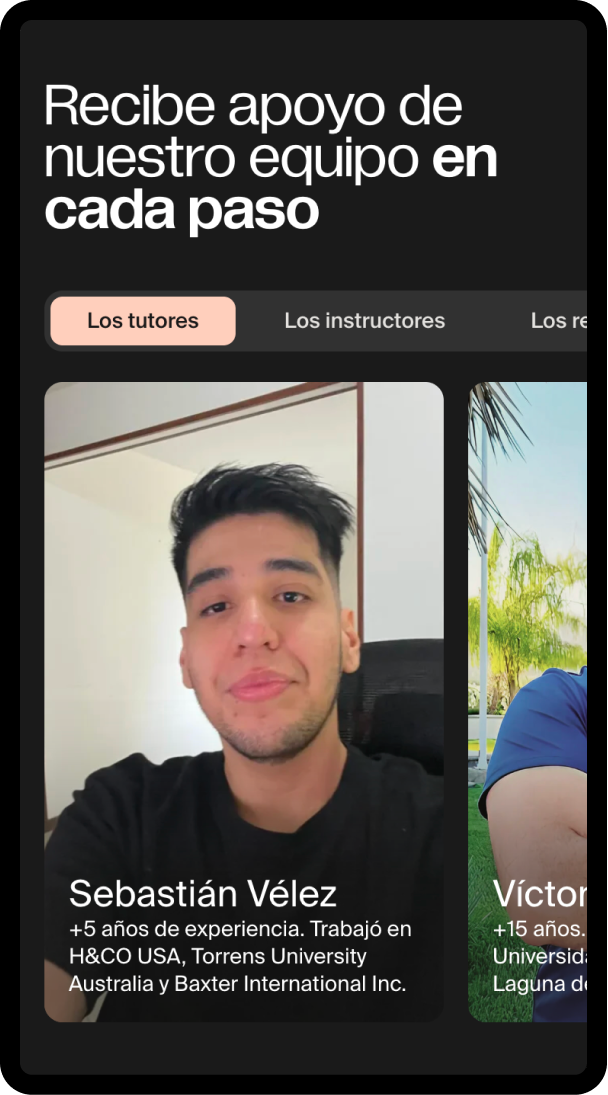
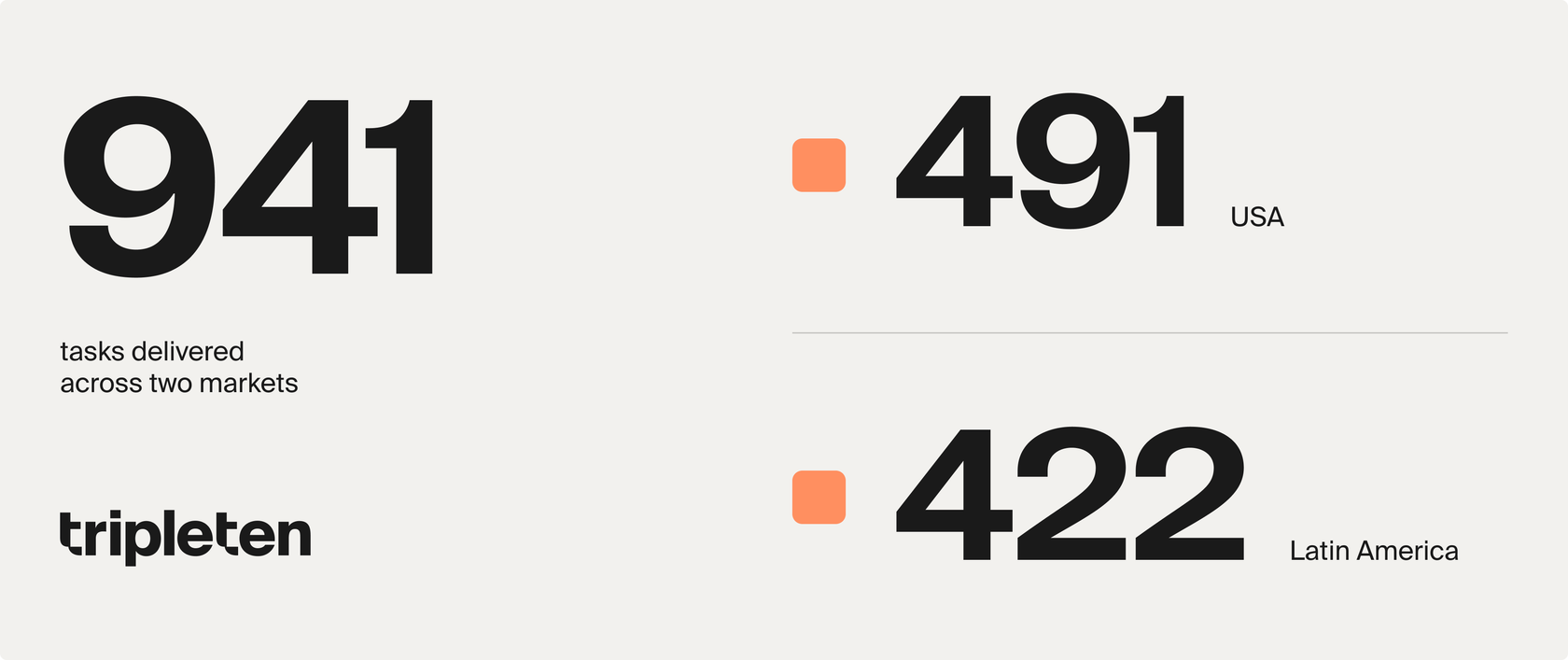
For TripleTen USA and Latin America, we handle everything from landing page production and hypothesis testing to platform migration, automation, and day-to-day website support.
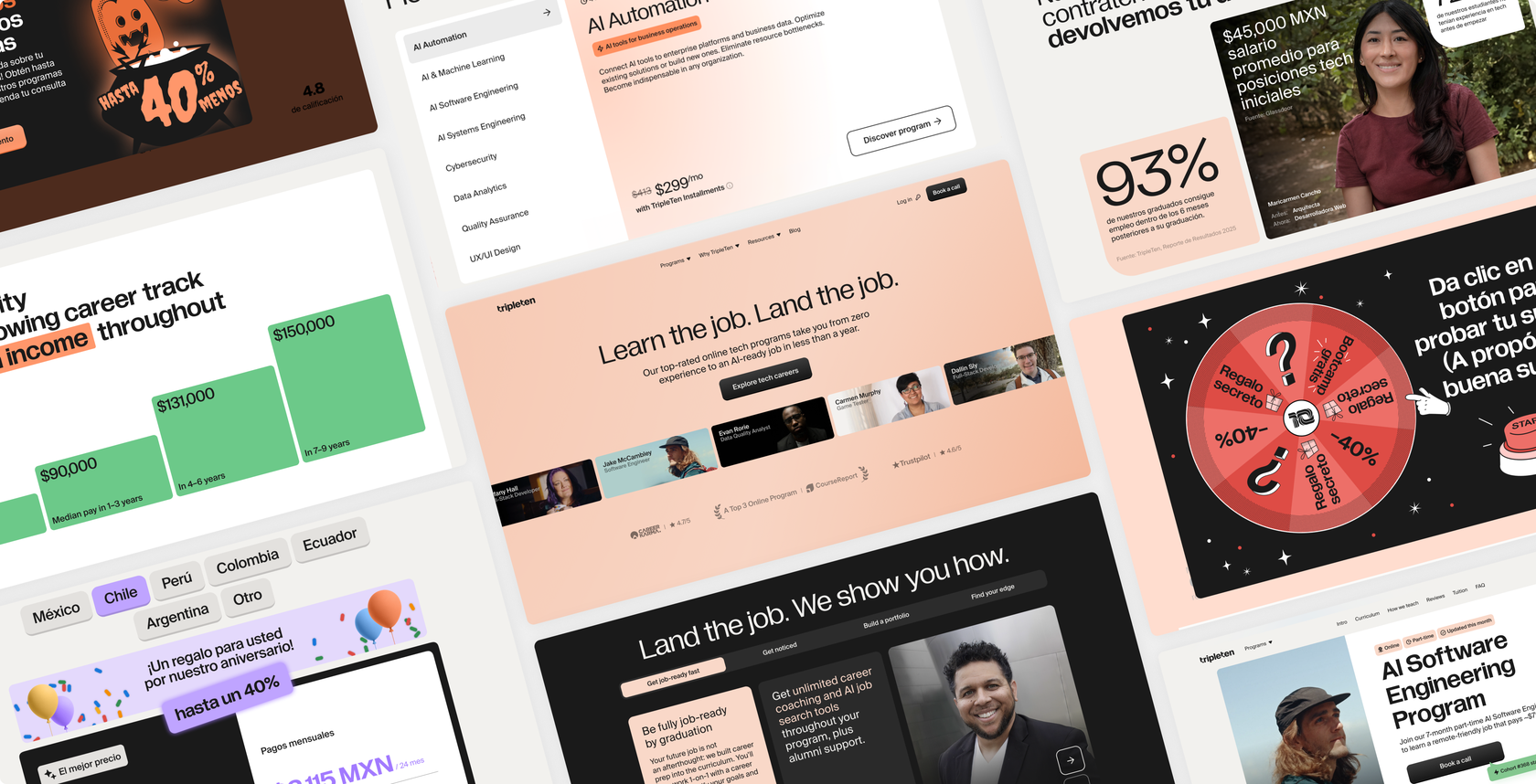
Launching web pages & maintaining existing ones
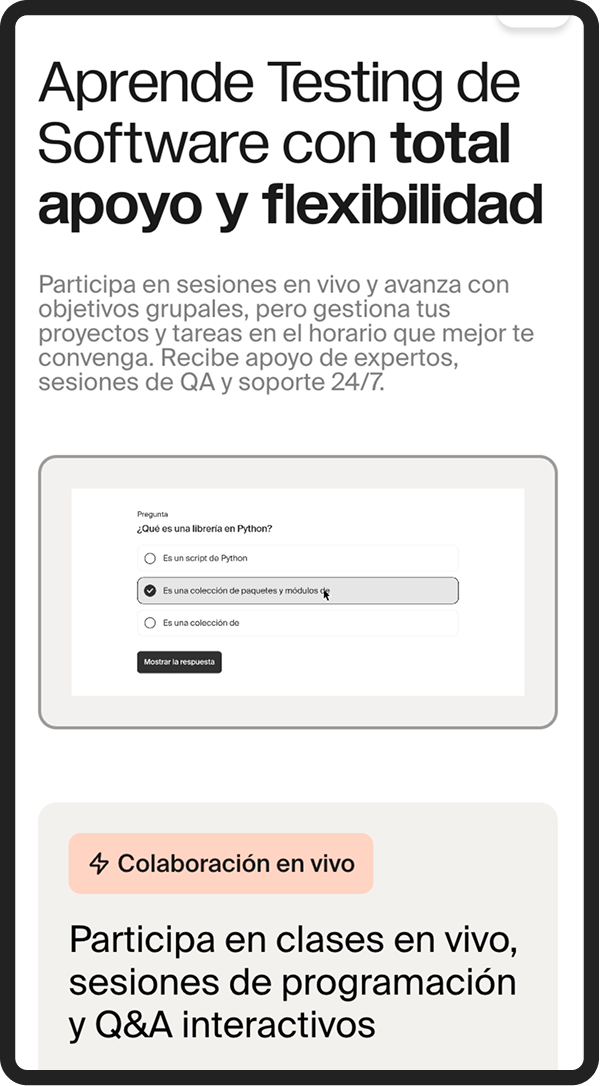
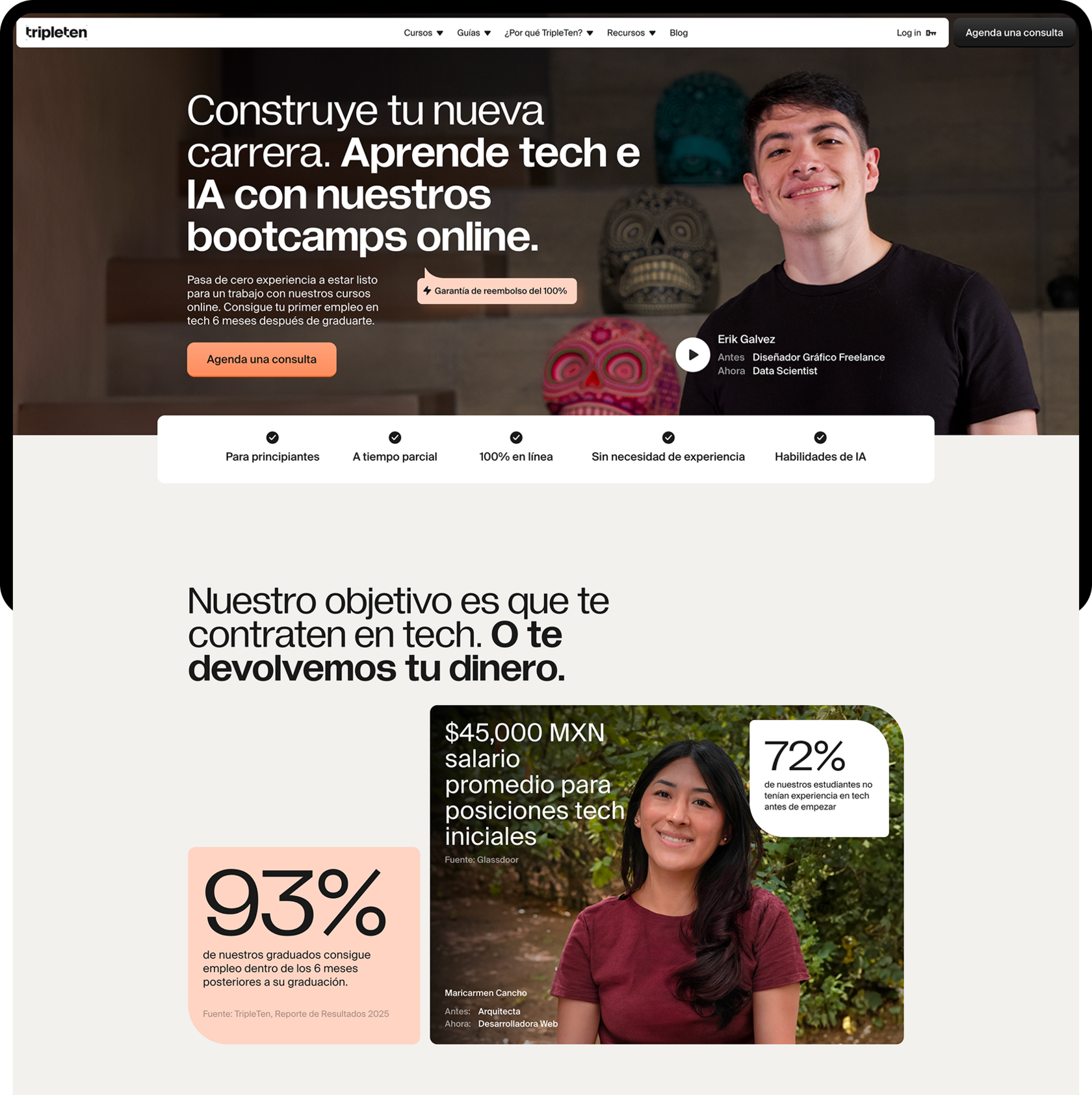
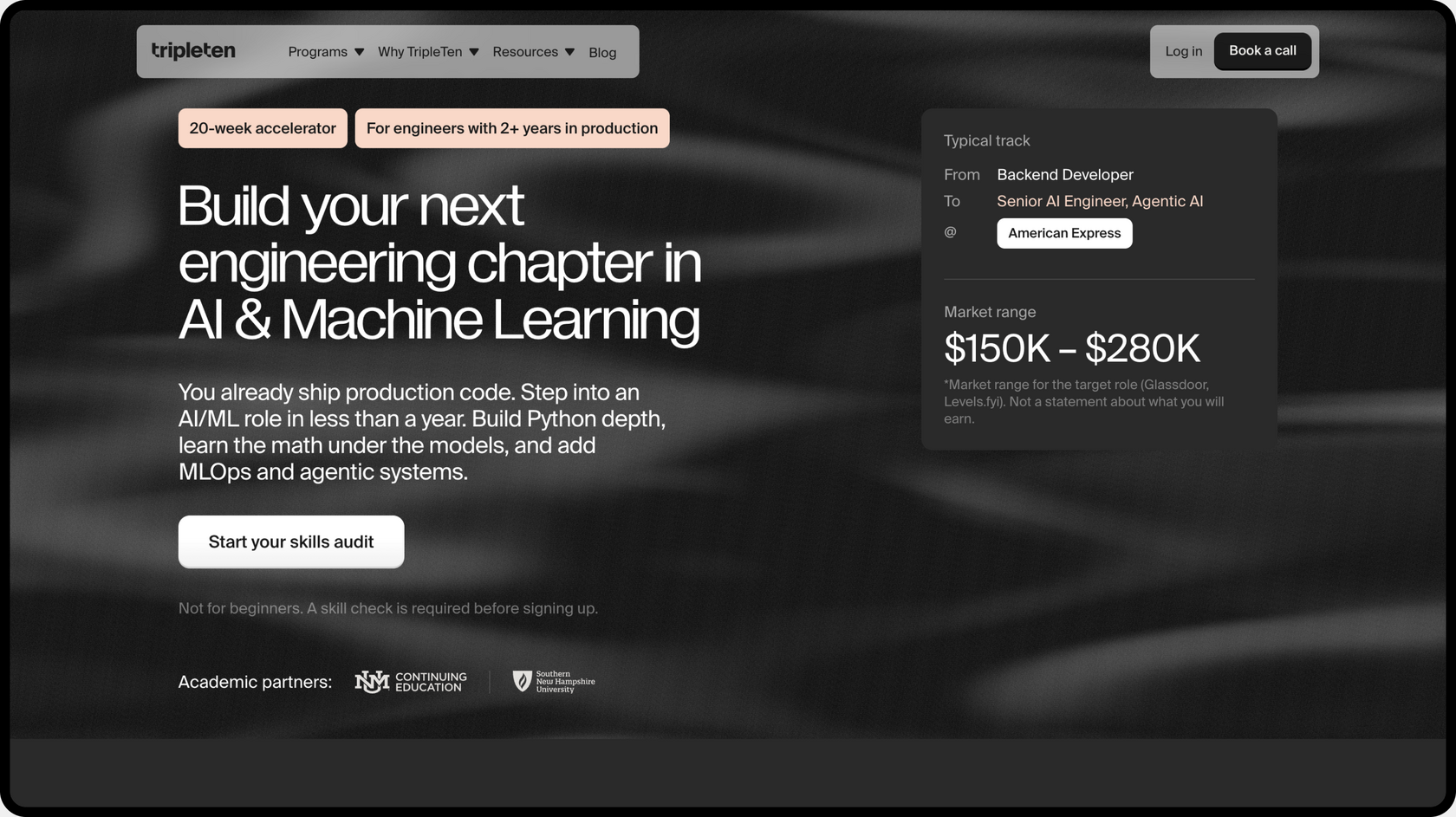
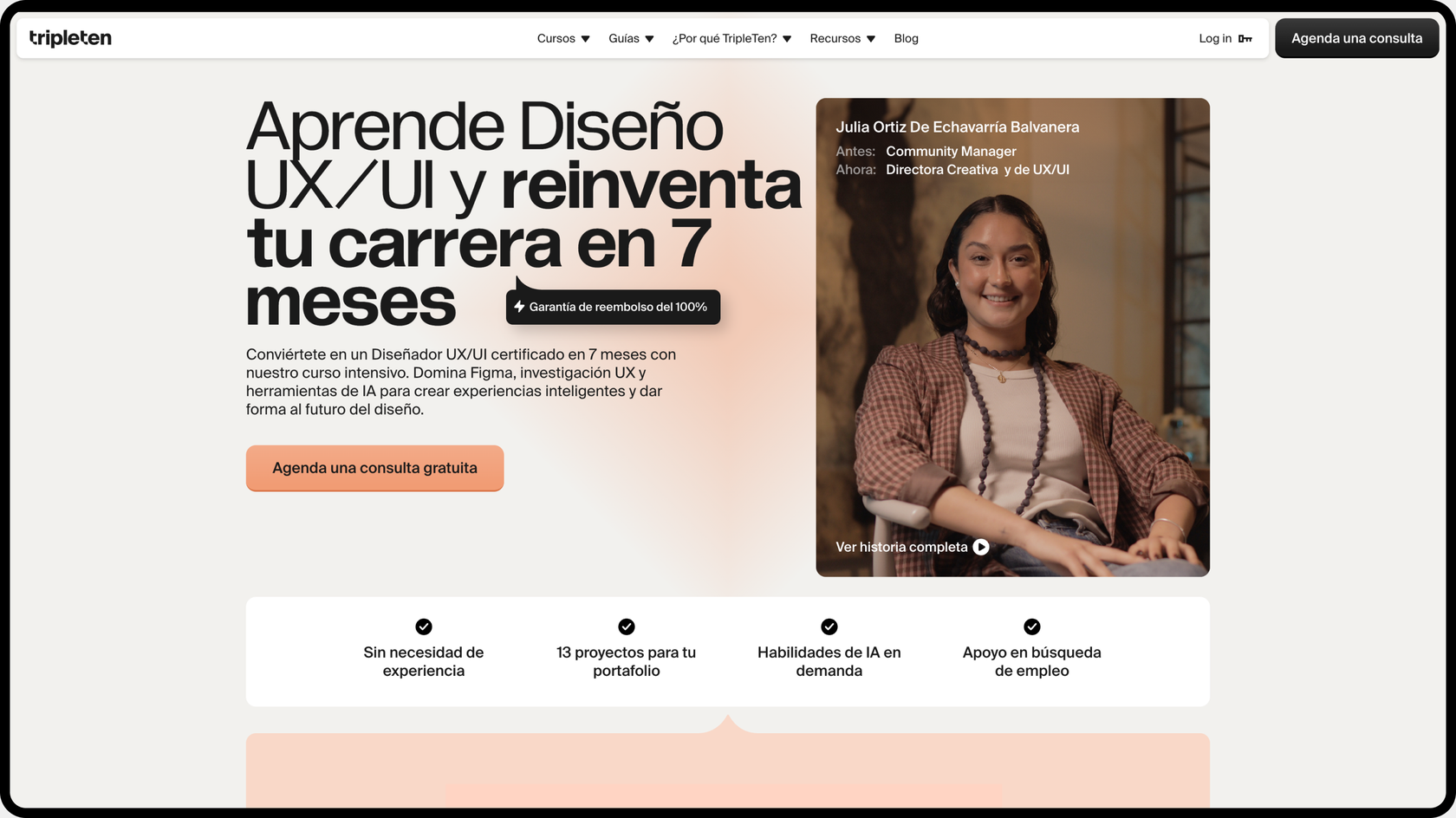
Over the period we have launched 50+ new web pages, redone existing ones, and built a library of reusable React components that pages are now assembled from
Scale stopped being a problem. Instead of editing blocks page by page, we change a component once and it rolls out everywhere.

Danya Shamilin
Manager
Lots of moving parts on this one: offers, pages, two platforms, and a frontend that had to hold up throughout. Best part was the international scope, reaching people in different regions and helping them learn new professions. Even under tight deadlines, quality stayed solid.
Platform migration
From no-code to a more efficient custom solution
Growth ran into the limits of the original no-code setup. We took part in evaluating alternatives, comparing several builders on flexibility, subscription costs, hosting requirements and helped the TripleTen team land on custom solutions (CMS plugin with an Astro and React frontend). The changes are visible in everyday updates.
AI assisted development
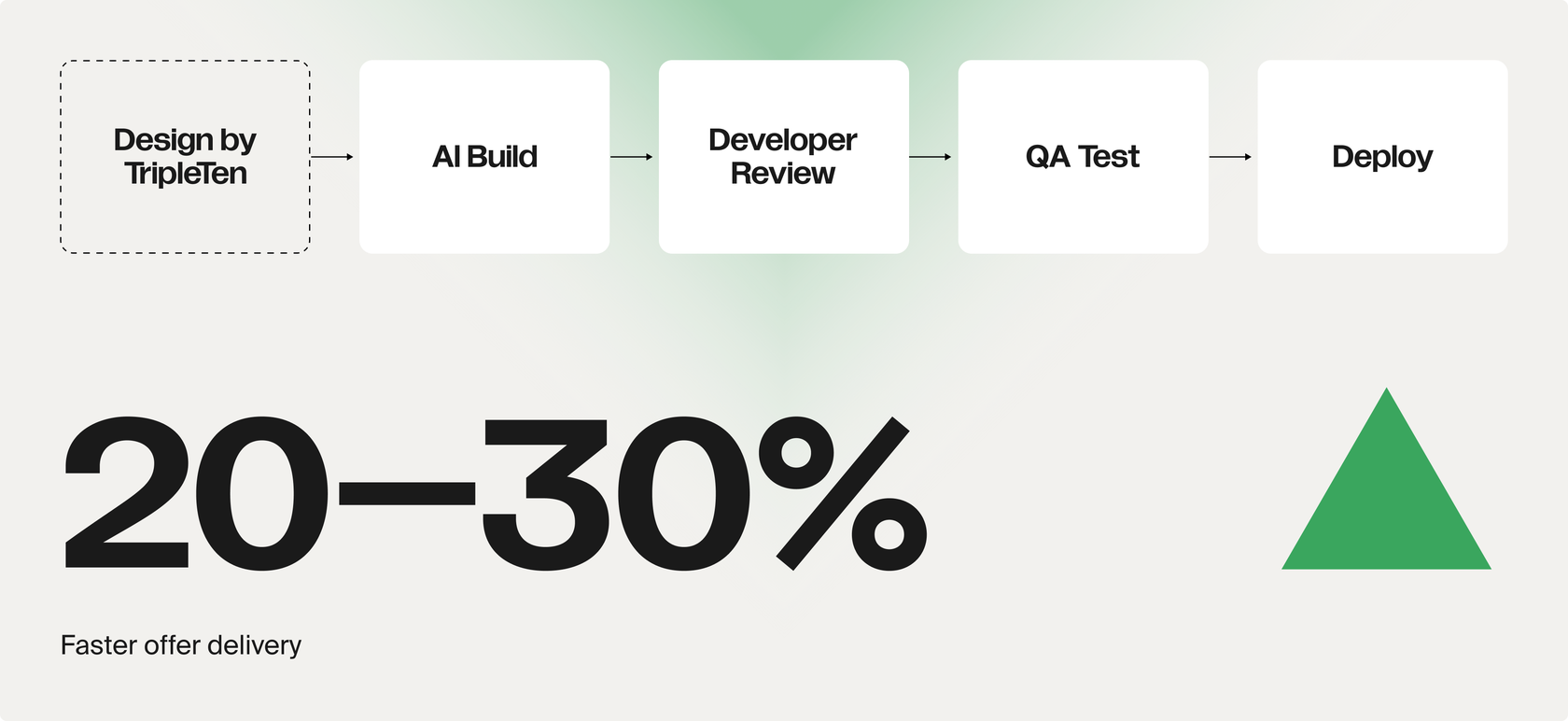
We cut average offer development time by 20-30% with an AI-assisted workflow
The project context has been written into the codebase itself: architecture, conventions, and the accumulated quirks that usually live only in a developer’s head. This way an AI agent builds most of the layouts from Figma. A developer refines them. Average offer development time dropped to 30%.

Pavel Potemkin
Frontend Developer
Empowering AI agents to automate routine layout generation from Figma designs was a great idea. It lets the dev team to focus on higher-value polish. As our codebase context deepens, we are expanding this AI-driven workflow across our larger engineering initiatives.
TripleTen USA
Automatizations of key product flows with complex animations
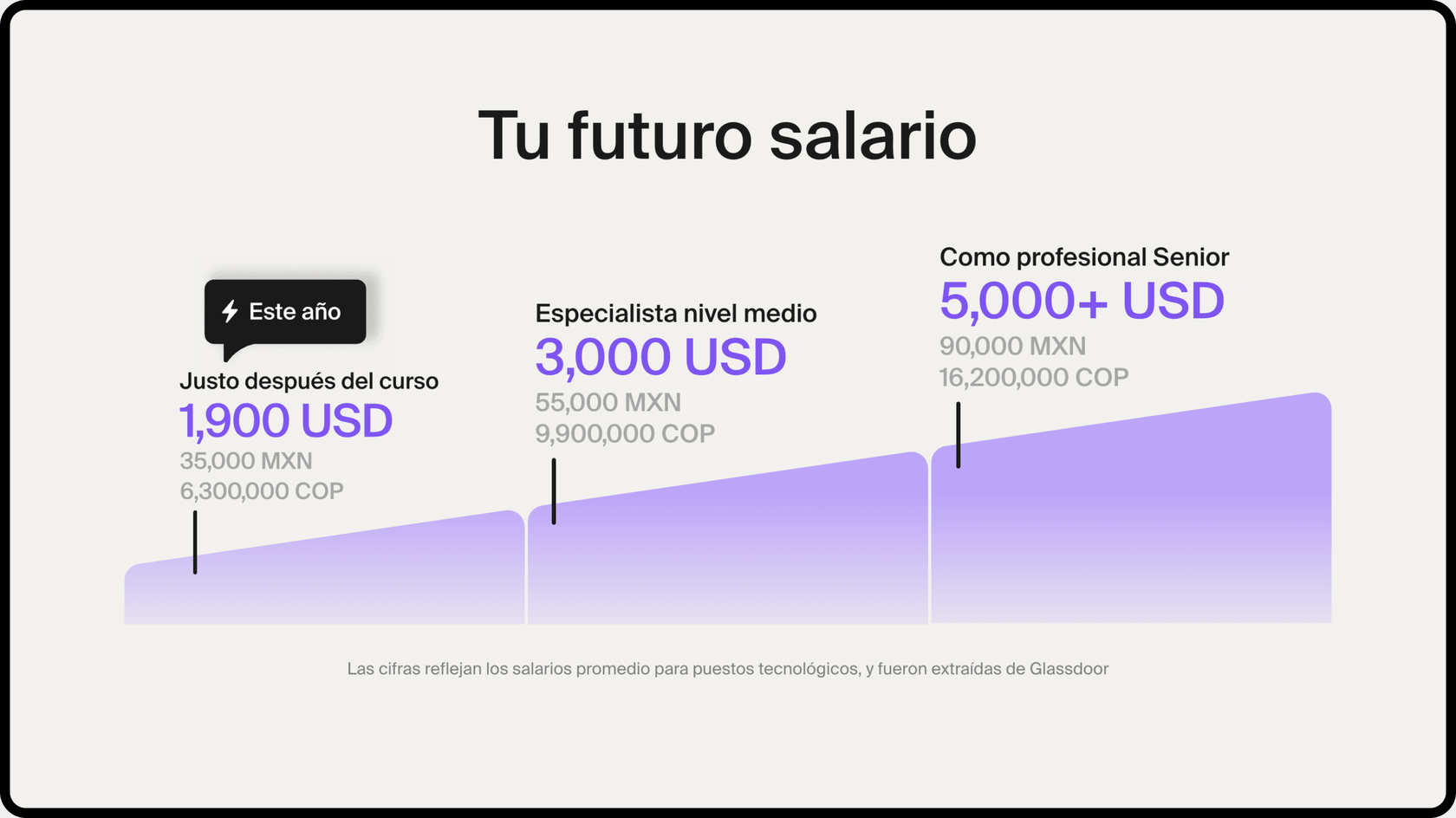
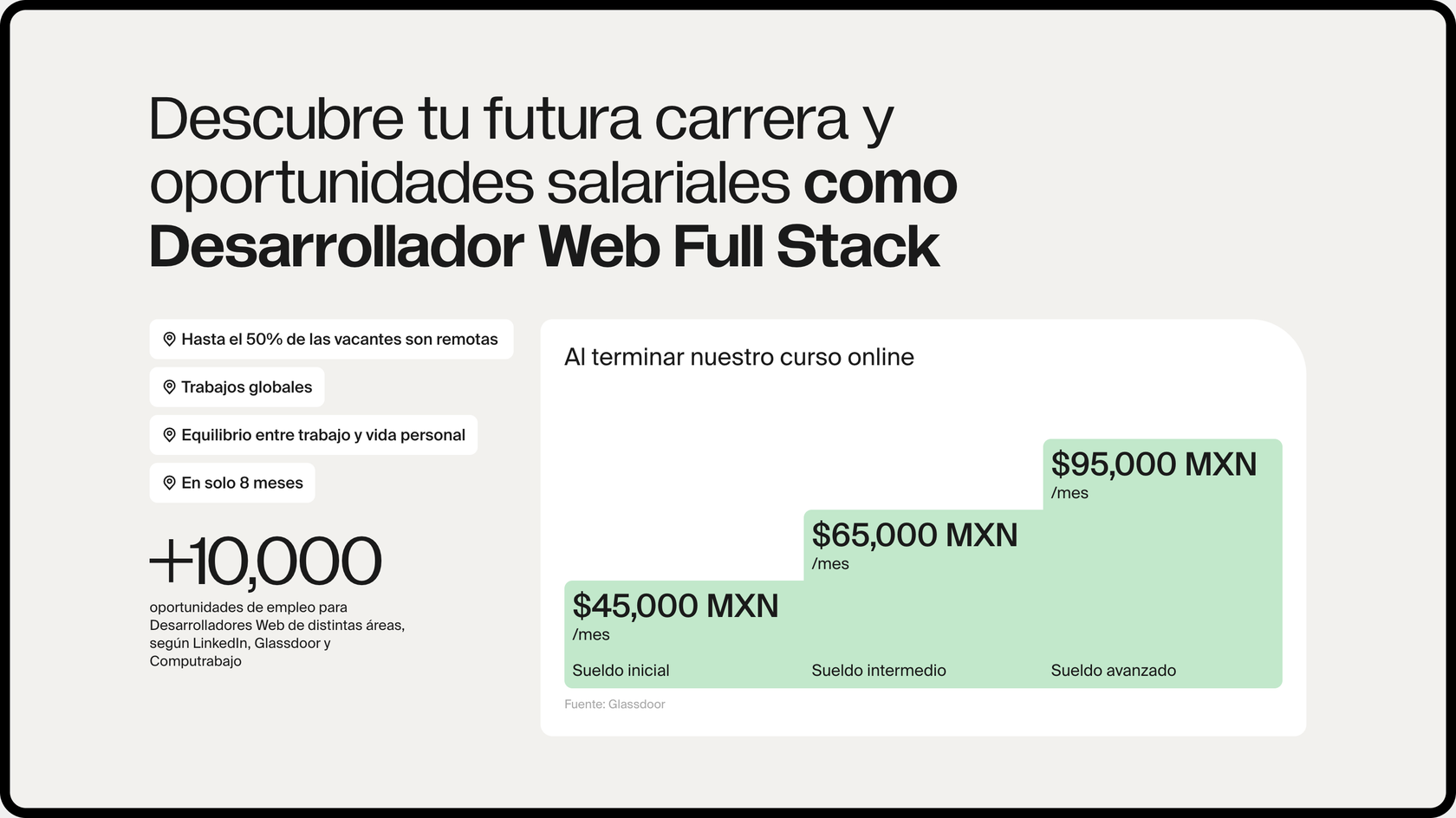
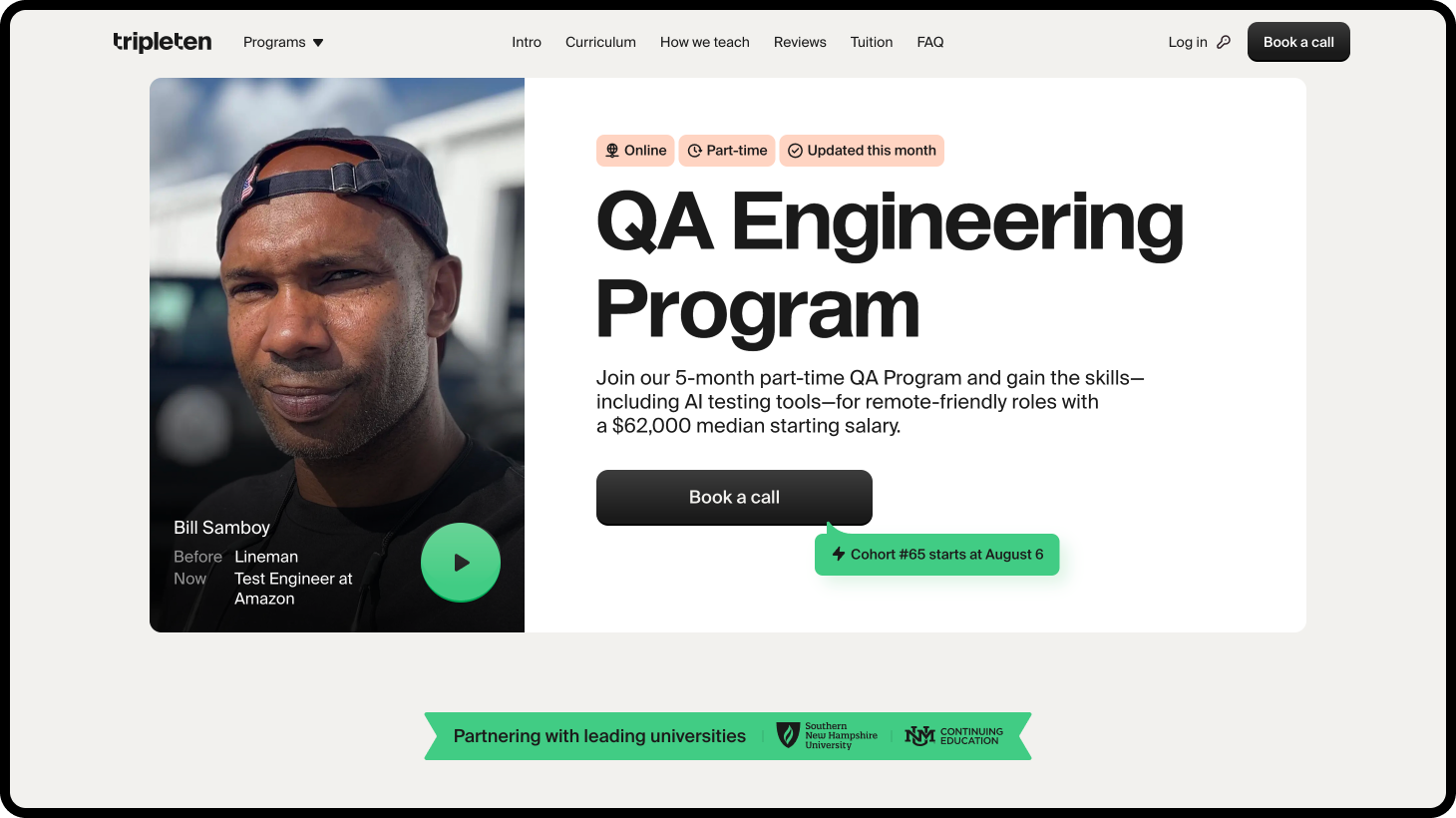
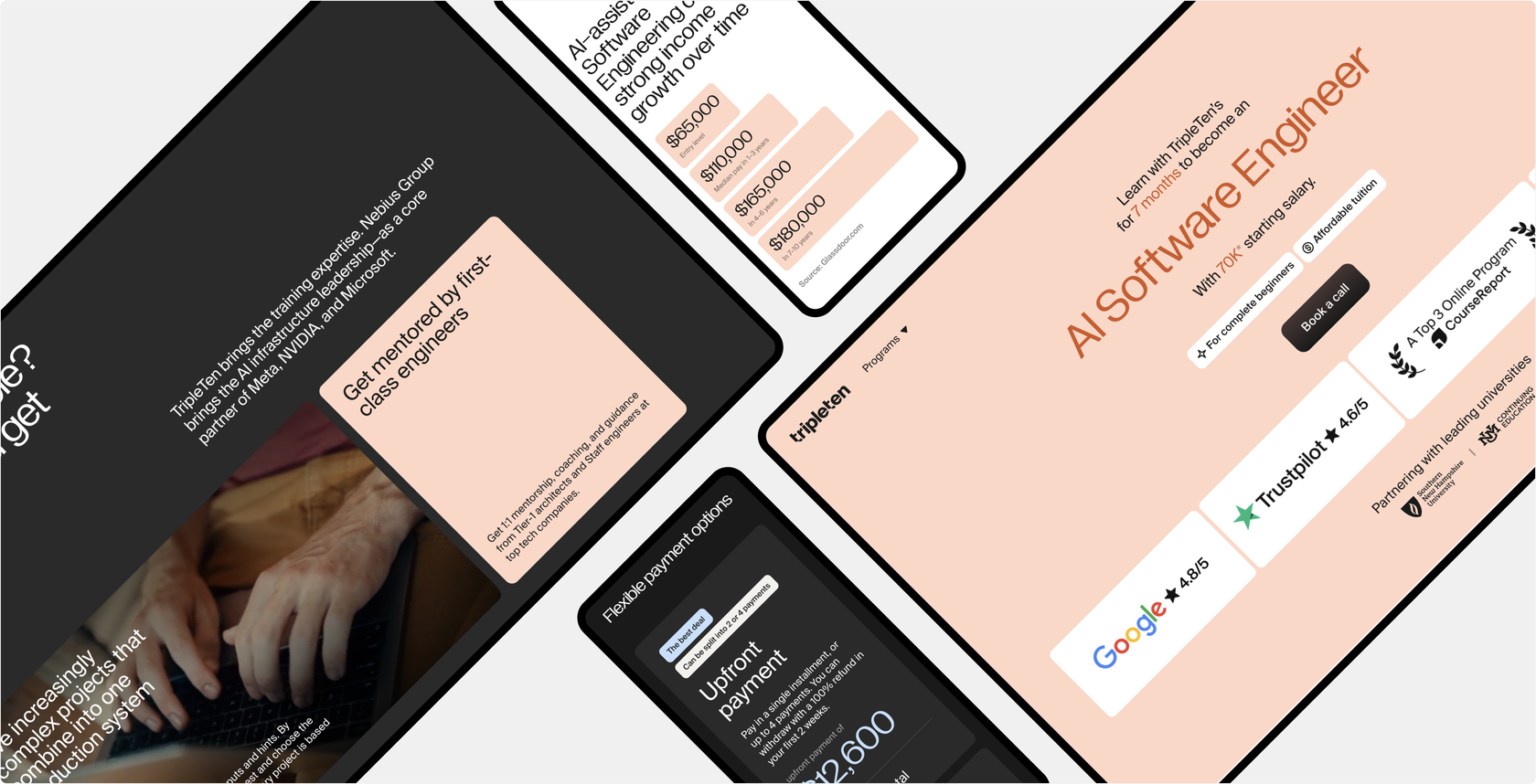
We have automated Special Offers and implemented dynamic price updates with flexible parameter management. We also supported complex animations and rebuilt the whole homepage on a new component system.
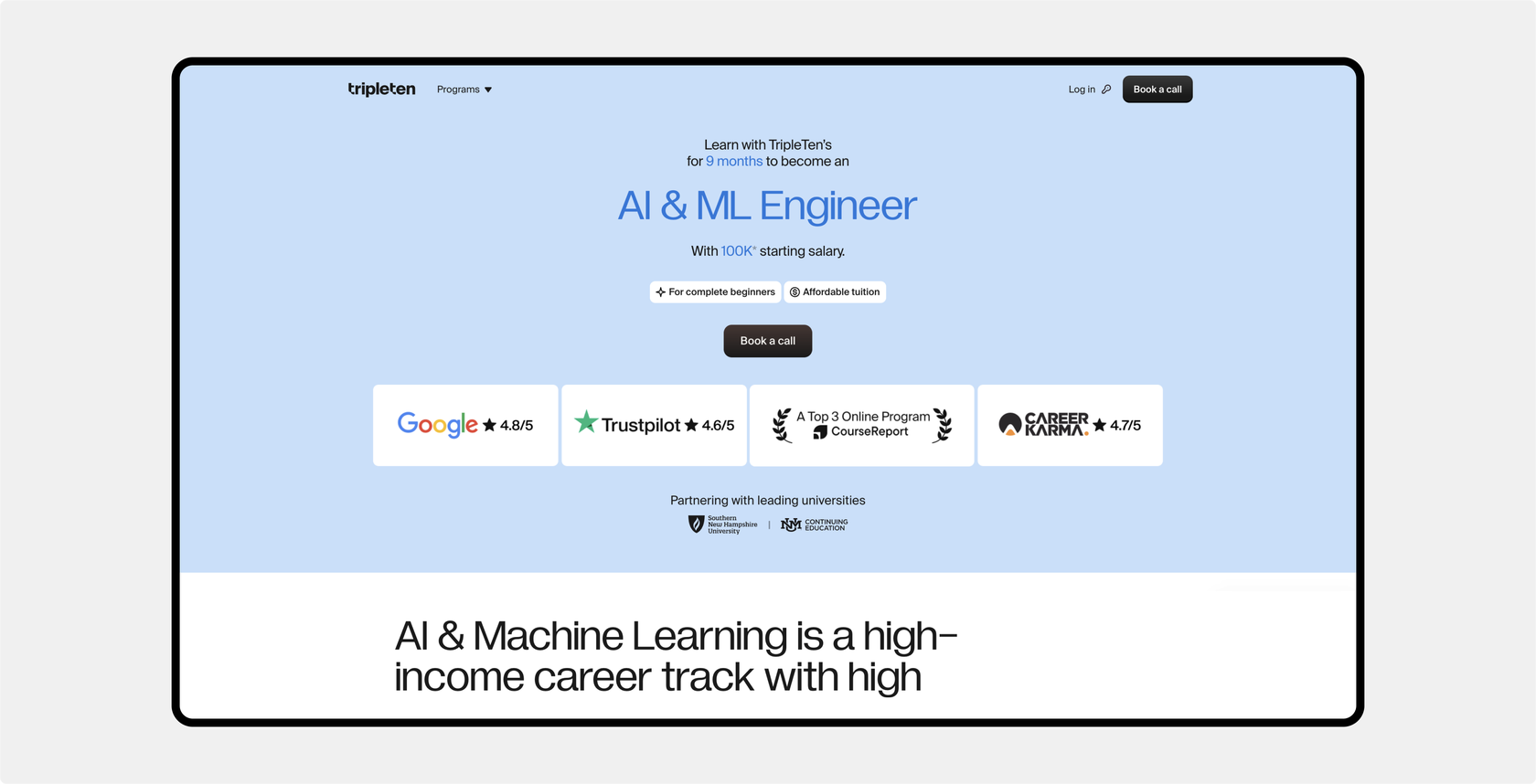
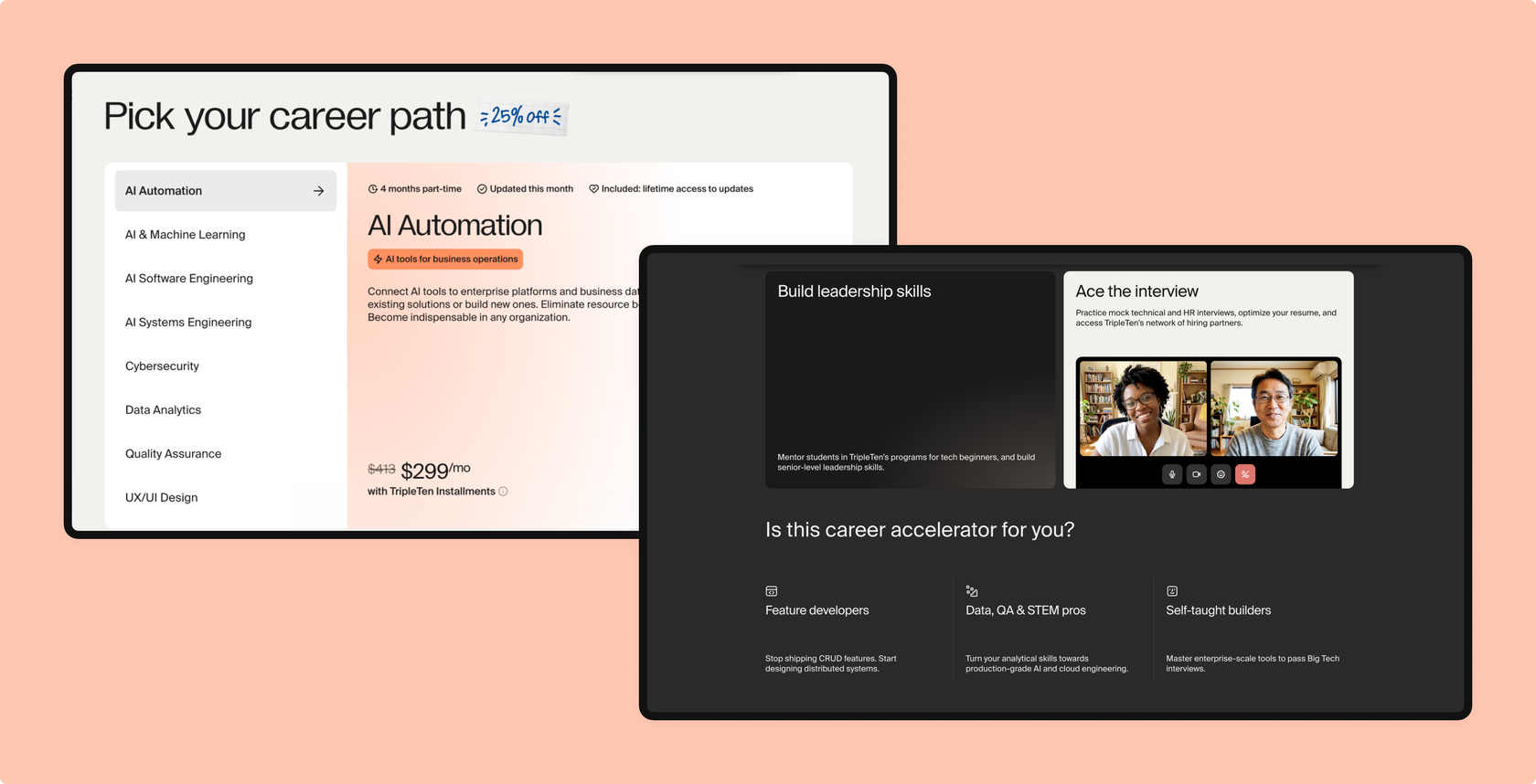

Vita Bykova
Manager
The project is scaling fast, so keeping up is a must. We continuously optimize processes and automate routine tasks to deliver faster, reduce errors, and maintain high quality — even at speed.
TripleTen Latin America
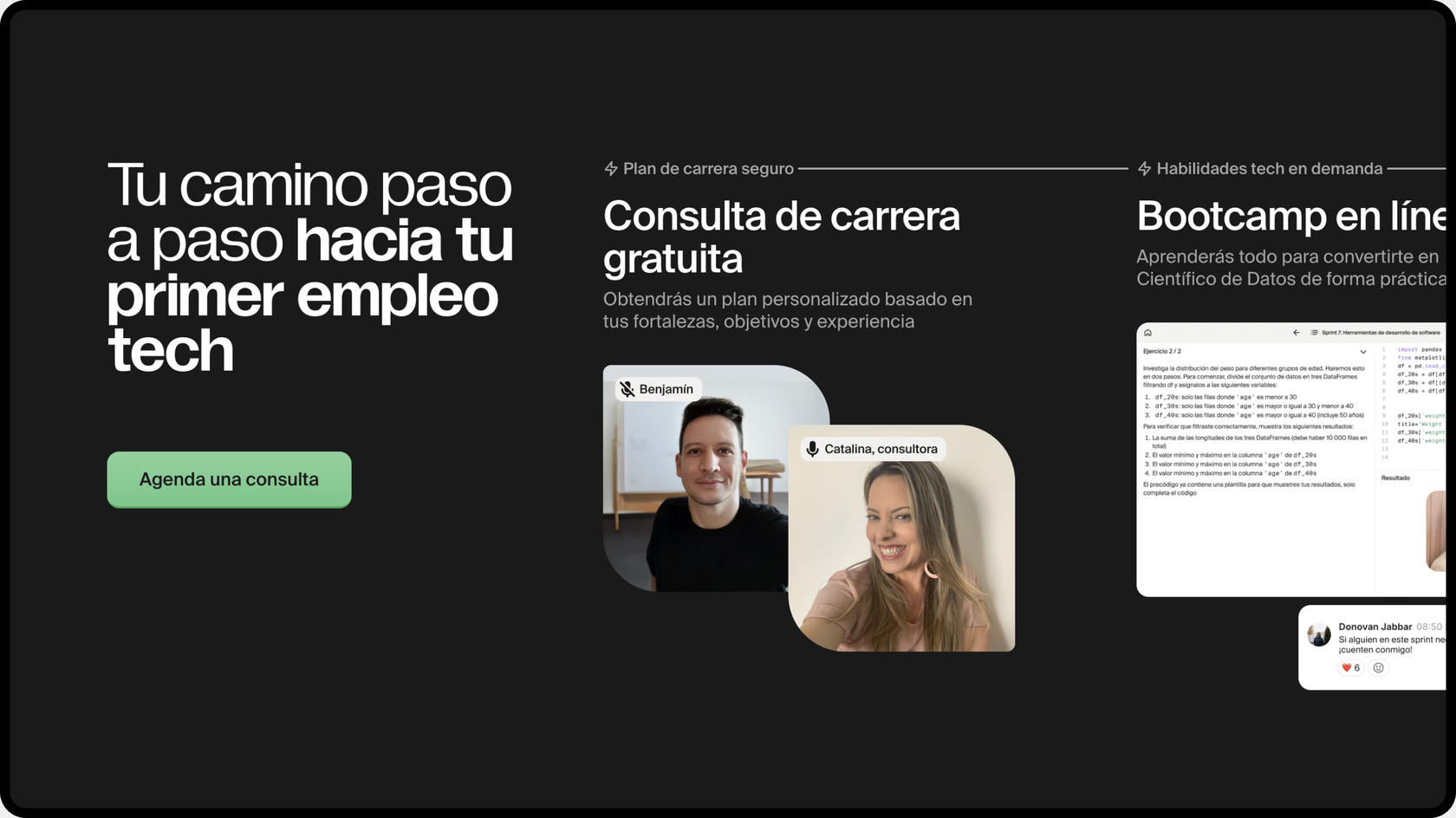
Automized offer flows, interactive presentations and new market pages
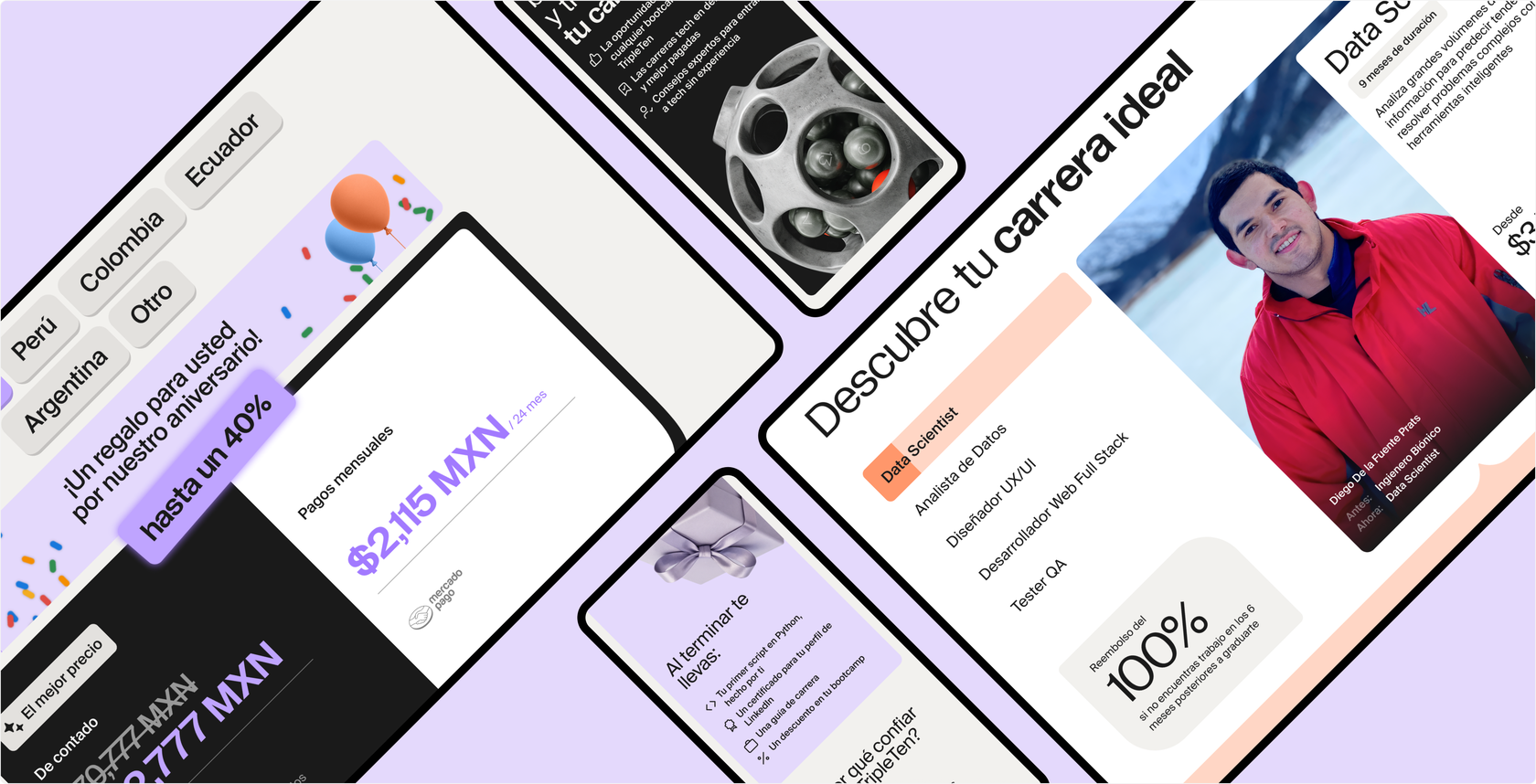
Automizing offers and setting up logic that deploys banners and pop-ups, being always in sync with current pricing, instead of relying on third-party pop-up tools (no more design compromises).
We also built interactive sales presentations with video, animation, tabs, promotions, and full-screen layouts. The presentations are per-country and price-aware, so opening or closing a market is a change rather than a new development from scratch.
Over this period we have launched Colombia, localized prices and data across every market, and shipped promo campaigns for local occasions from Valentine’s Day and Mother’s Day to the FIFA season.


Anton Raevsky
Frontend Developer
From our development team’s perspective, the component-based approach gives us much more flexibility in building and scaling pages. It allows us to reuse and adapt React components for different scenarios, quickly customize layouts, and apply modern frontend practices without rebuilding everything from scratch.
Special offers
updates
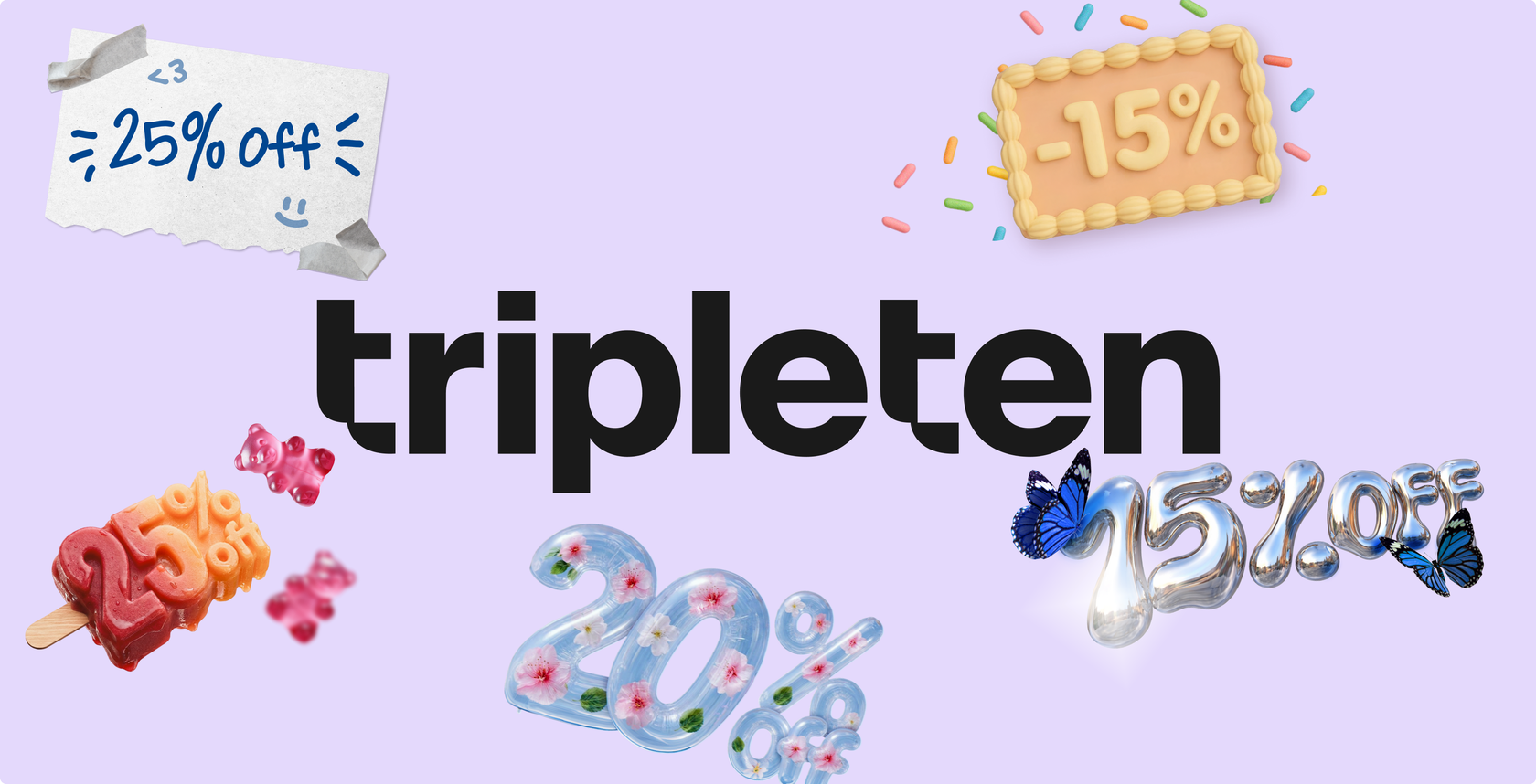
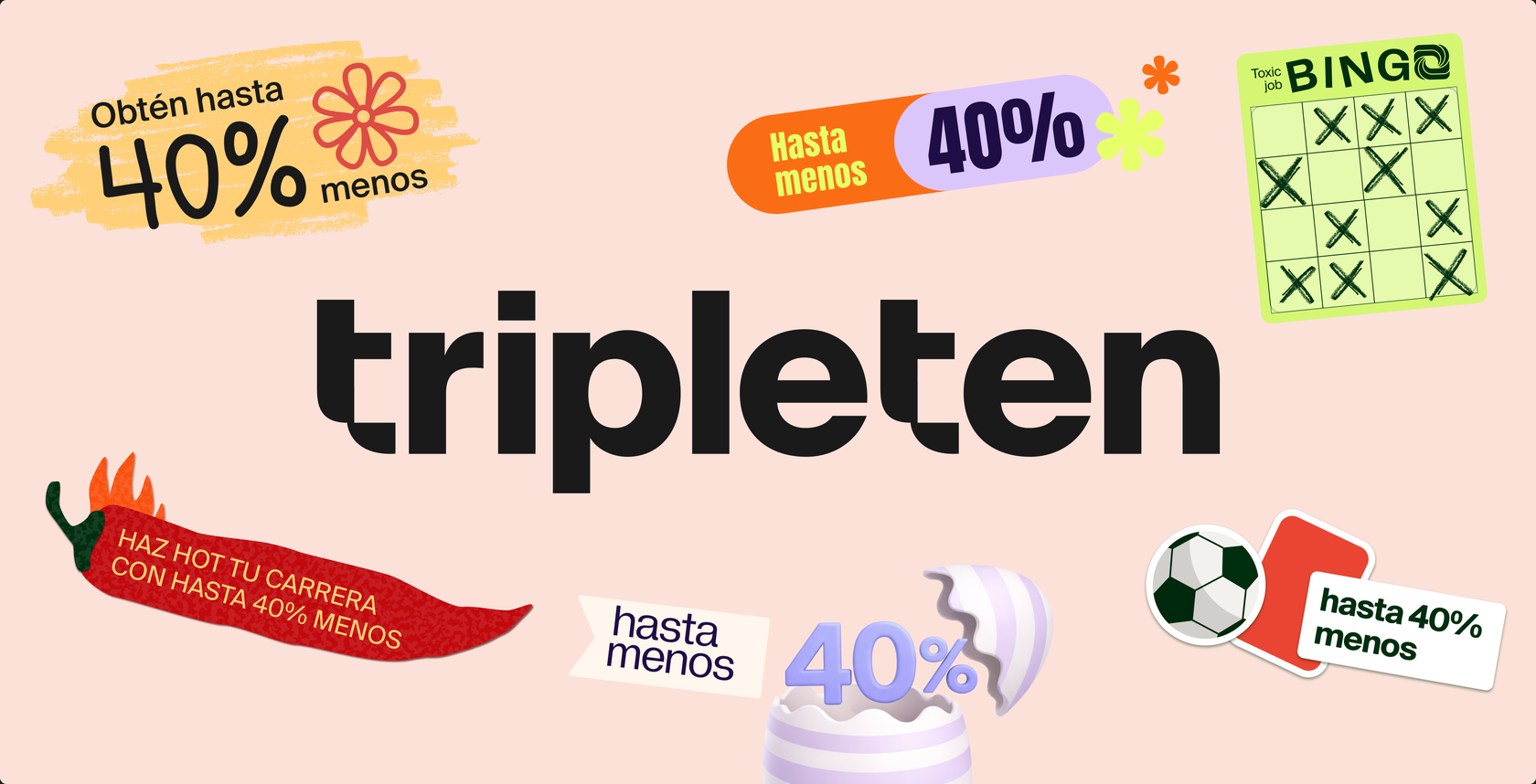
35+ special offers and promo landings for the USA and LATAM markets
Over this period we have shipped 75 tasks around offers and promo. New Special Offer for the USA nearly every month, holiday campaigns for Latin America from Valentine’s Day and Día de los Muertos to Black Friday and Mother’s Day.
Blog
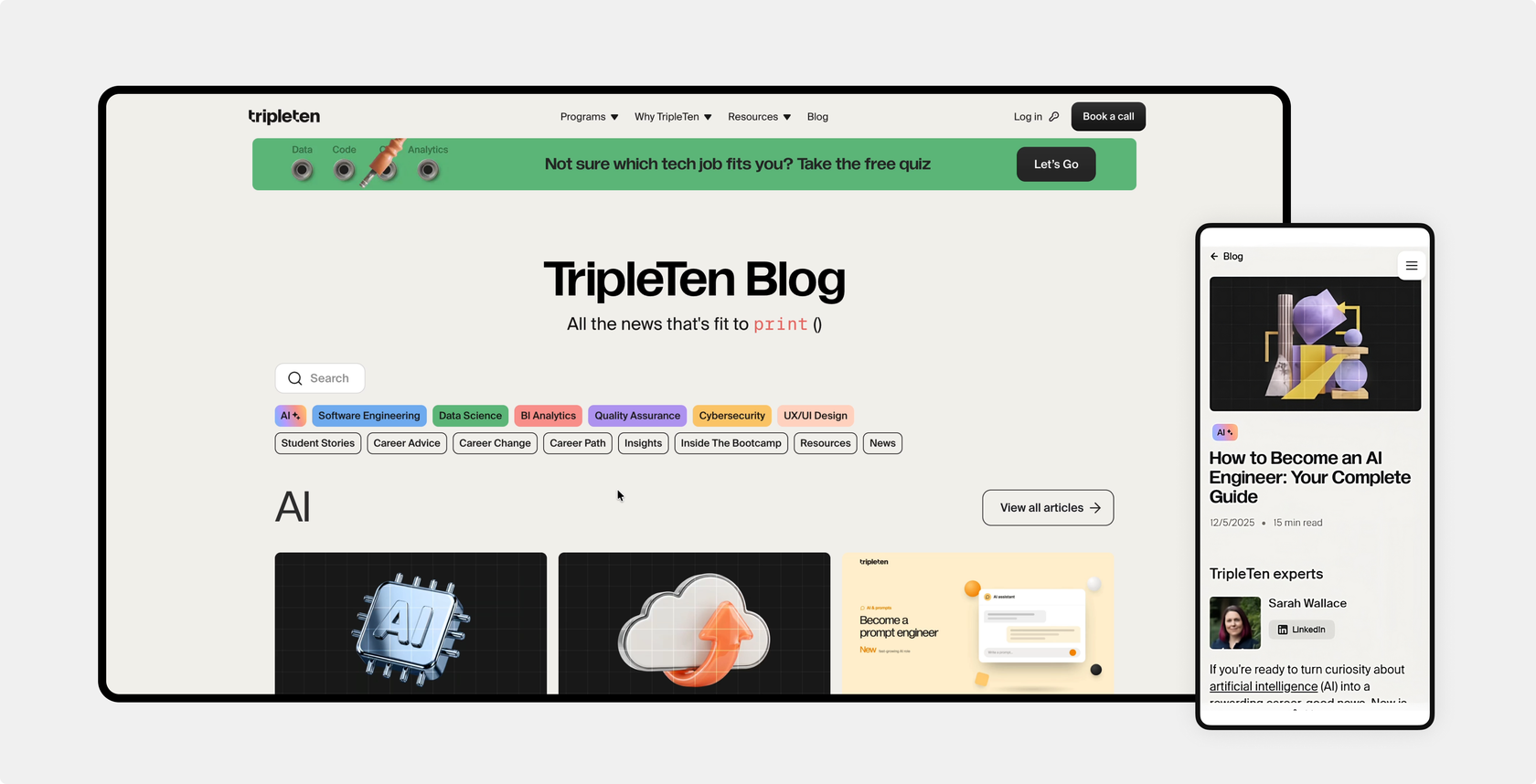
We have rebuilt the blog structure and turned it into a conversion channel
The blog is actively evolving and driving value. We have rebuilt its structure and internal logic, removed legacy solutions, cleaned up the codebase, and introduced an architecture that scales, redesigned the article header and built-in a booking form, added embeddable quiz banners and a set of HTML templates the content team can use without a developer, and reworked article layout, typography, and structured data for search. Today the blog works as a full fledged content channel, not a static archive.

Anna Rozhkova
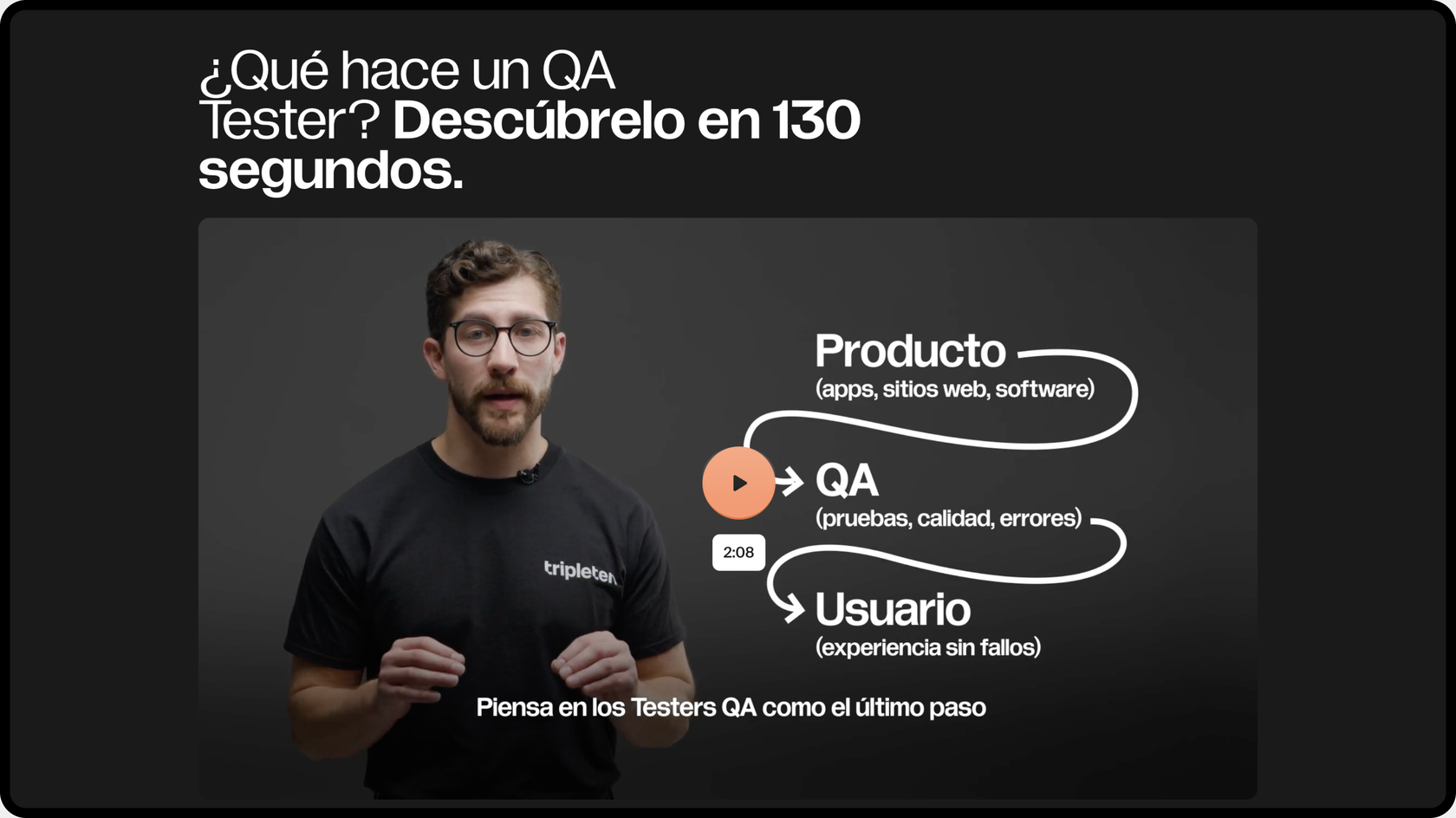
Quality Assurance
From a technical perspective, it’s great that the content team can now make some changes without involving developers. This makes maintenance much easier: less manual work, faster updates, and a simpler way to keep improving the product.
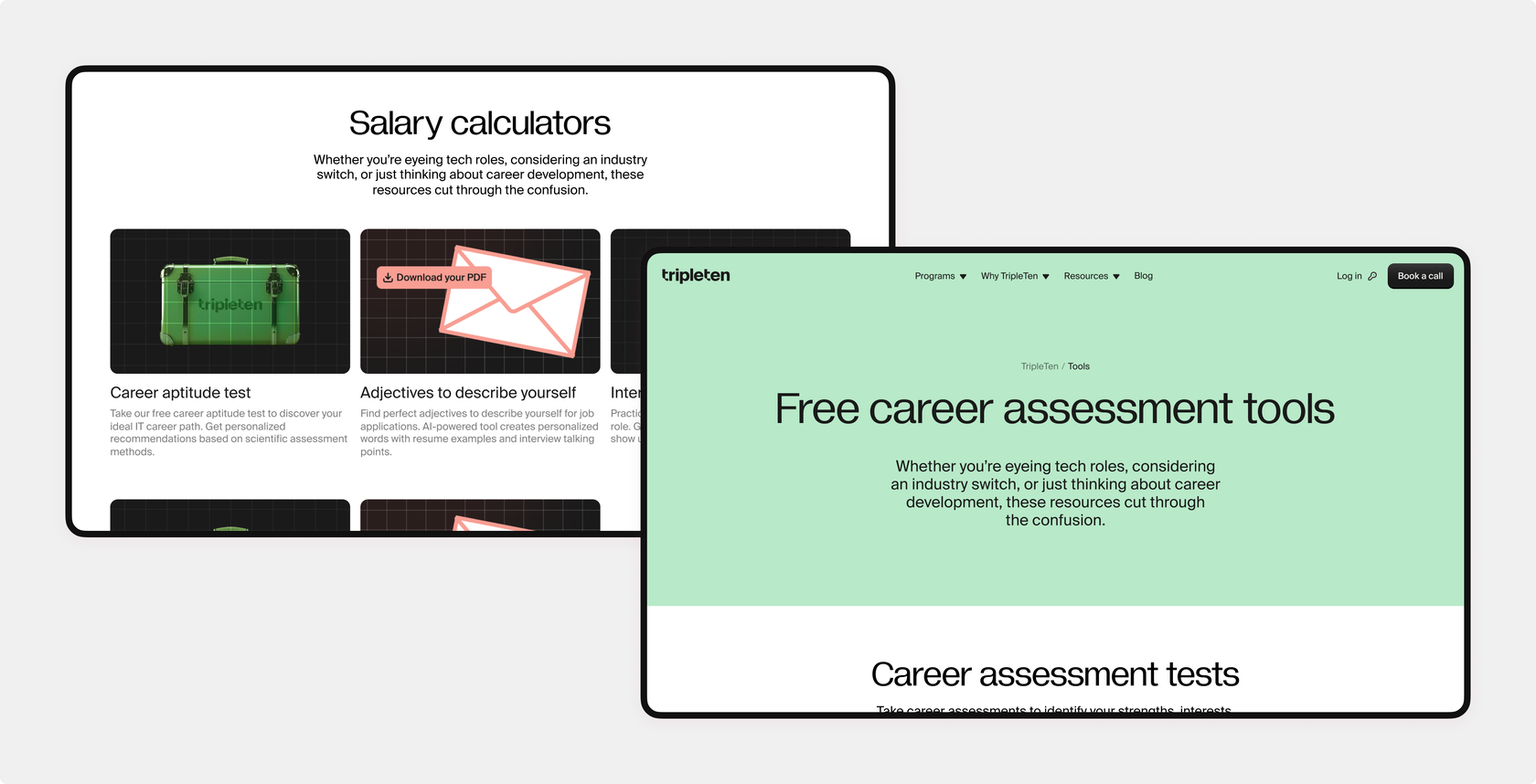
Flexible SEO page components with pixel-perfect implementation
We built a set of reusable components for SEO-driven pages, including headings, breadcrumbs, article lists, and cards. The components are designed for manual content management, support unlimited items, adapt to varying content states by hiding empty fields, and maintain a consistent grid and layouts fully aligned with the design system.
Team
Art Direction & Design
TripleTen Design Team
Management
Yulia Myshlyaeva
Vita Bykova
Vladimir Filatov
Danya Shamilin
No-code development
Maria Polyanskaya
Yana Oleinikova
Elena Filchugova
Boris Vasiliev
Frontend
Denis Hohryakov
Vladimir Rotov
Temirlan Alihan
Anton Raevsky
Pavel Potemkin
Eugeny Seliverstov
Eugeniy Vanchugov
QA
Anna Rozhkova
Vita Bykova